Showing posts with label Japanese proverbs and sayings. Show all posts

Monday, December 03, 2007

Level Check & Fat Pig

Saturday, December third, two thousand and seven

I took a level-check test yesterday at a new NOVA's branch, which reopened two weeks ago in front of JR Higashi Kishiwada station. Actually, I'd like to review old lessons I've taken before as a level-5 and level-4 student through real lessons, so I wanted to let my level down, from 3 to 4 or 5. That's why I took the check although I don't necessarily have to take it.
The teacher who checked my skills were an Australian teacher and used to be a teacher of mine when I belonged to old Kishiwada NOVA school. He knows my level.... It's meaningless to check my skills because he knows my real abilities very much. Plus I wasn't able to pretend like a level-4 or 5 student. X( Of course, he assessed my capabilities as high. After all I'm going to take level-3 lessons(ZONE-G) from next week.

To change the subject, a unique phrase, "fat cat", made me laugh actually. My dictionary says that it means "someone who has too much money, especially someone who is paid too much for their job - used in order to show disapproval." In Japan, they say "fat pig" as the same meaning expression. And also they say "to give cats money" or "to give pigs pearls" as "to waste assets." The former NOVA president, stupid Sahashi, was totally a fat cat or a dead duck. According to my dictionary, "a dead duck" means that a plan, idea etc that is not worth considering because it is very likely to fail. I guess the meaning sounds like useless and needless stuff. I don't know whether or not my guess is correct though.


『レベルチェックと太った豚』
2007年12月3日

昨日、新しいNOVAの支店(JR東岸和田駅前に再オープンしたところ)でレベルチェックテストを受けました。実は、実際のレッスンを通して、レベル4または5のときに受けたレッスンを復習したいんです・・・そのためにレベルを落としてもらいたかった。(3から、4または5) だから、レベルチェックを受けたのです。必ずしもレベルチェックを受ける必要はないのですが・・・
レベルチェックをしてくれた先生は、オーストラリア人の先生で、かつて私が所属していた旧NOVA岸和田校の先生でした。彼は、私のレベルを知ってるやん・・・・チェックする意味が無い・・・だって、彼は私の能力をよく知っているから。そして、私はレベル4か5の生徒の振りをすることができなかった。(>_<) もちろん、彼は私の能力を高く評価してくれたので、結局、来週からレベル3のレッスン(ZONE-G)を受ける予定。

話は変わって、面白いフレーズ"fat cat(太った猫)"を見て、笑ってしまいました。私の辞書によると、その意味は、『有り余る金を持っている、特に多すぎる給料を持っている人。不満を表すために使われる』ということらしい。日本では、『太ったブタ』が同じ意味の表現にあたります。そして、また、日本では、『猫に小判』『豚に真珠』というのは、『財産を無駄にする』という意味になります。前のNOVAの社長『アホの猿橋』は、まさに"fat cat"もしくは、"dead duck"ですね。私の辞書によれば、"dead duck"というのは、『考慮するの価値の無い計画、アイデアなど。なぜなら、おそらく失敗しそうだから。』私の推測では、役に立たないとか、不必要なモノといった意味のような感じがします。私の推測が正しいかどうかわかりませんが・・・。

Monday, November 12, 2007

Nine Days' Wonder(=人も噂も75日?)

2007年11月12日(月曜)
Monday, November, twelfth, two thousand and seven

日本語と英語は全く違う言語ですけど、ときどき似たような言い回しを見つけるときがあります。それは、そうです。言語は違えど、同じ人間なんですから、根底にある感覚はやはり似ているのでしょうね。
先日、"nine days' wonder"という英語の表現を目にしました。私の推測ですが、これは日本語の『人の噂も75日』に近い表現だと思います。日本では、『人の噂(話題)なんて、せいぜい75日もあれば消えてしまうもんさ』というような意味ですが、英語では『大騒ぎするのも、せいぜい9日くらいなもんさ』みたいな意味なのでしょうか?9日と75日・・・大きな差があるのは、なぜなのでしょうか?日本人のほうが、つまらないことで大騒ぎする傾向が強いからかなぁ・・・う~ん・・・そうかも。(笑)

Even though Japanese language is completely different from English, sometimes I find similar expressions between them actually. That's understandable because those people use different languages but they are the same human being, so the underlying senses would be similar, I guess.
The other day I saw an English term "nine days' wonder". The way I see it, it means similar to this Japanese one "人の噂も75日(hito no uwasa mo nana juu go nichi.)" It means rumor and popular topics will disappear within 75 days at longest in Japanese, but on the other hand, does the English one mean it will continue for 9 days at longest to make a fuss about small things? I don't know why there is a big difference, 9days and 75 days.... I suppose that Japanese people strongly tend to make a big deal about minor things. Umm... Could be. :D

Saturday, October 27, 2007

Wedding and NOVA(結婚式とNOVA)

2007年10月27日(土曜日)
Saturday, October twenty seventh, two thousand and seven

今日は、親戚の娘さんの結婚式のため、大阪市内に出向きます。大阪はあいにくの雨模様ですが、若い人の門出を見るのは、とても新鮮な気持ちになるので、年寄りの私にも良い気分転換かもしれません。(笑)

ところで、私が通っている英会話スクールのNOVAは、昨日、社長を解任し、「会社更生法の適用」を申請しました。1ヶ月以内に支援企業が見つからない場合は、破産手続きをするそうです。仕方ないですね。既に支払った私のレッスン料がどうなるか不安でもありますが、それ以上に外国人の先生達・日本人スタッフの方々の生活が心配です。彼らになにかしてあげることはないか、日々頭を悩ませています。もちろん、それは私の仕事ではないけど、先生達と一人の生徒という関係以上に、とても仲良くなった人もいるので、何かしてあげたいのです。一番よいのは、私自身が新しい英会話スクールを経営する、というアイデアかもしれませんね。(^^♪ 土地と資金は、なんとかなります。一番の課題は、その運営と内容でしょうねぇ。事業計画をまとめる時間をなんとか作りたい。日本の諺に、『災い転じて、福となす』というのがありますが、そんなにうまくいくわけないですよね。(^_^;

I'm going to Osaka city today in order to attend a wedding reception held for a young lady of my relatives. It's a pity it's raining in Osaka now, however, it will make me feel fresh to see a departure of the youth, so it would be a good change of pace for old me. :D

By the way, an English school NOVA, at which I sometime take English lessons, removed the company president and applied for "assistance under the Company Resuscitation Law" yesterday. If the company can't find supporting organizations within one month, they will commit an act of bankruptcy. It can't be helped. I'm anxious about my lesson fee already paid but really worried about non-Japanese teachers' and Japanese staff's livings more than my money. I have been considering what I can do for them everyday. Of course it's not my business but I made friends with some of the teachers, I mean, the relationship between us isn't only the one between teachers and a student. That's why I'd like to do something nice for them. It might be the best idea to manage a new English private school by myself. :) I guess I can prepare the fund and the land somehow. The most important issues would be how to manage and the contents. I want to make the time somehow to write up the business plan. A Japanese proverbs says "Wazawai Tenjite Fukutonasu", that means "to turn the potential disaster to one's advantage", "to turn a misfortune into a blessing", or something like those, however, the new plan would never go well like that. :p

Monday, June 04, 2007

Kill Two Birds With One Stone

Monday, June fourth, two thousand and seven

Finding interesting English proverbs is really interesting to me actually. I can learn not only English but also effective life styles through it. As everyone knows, there's a famous common saying, "kill two birds with one stone", in English. I had thought it derives from the Japanese one, 一石二鳥(isseki nicyou), for ages, so I asked an English teacher the other day if it derives from the Japanese proverb or not. He replied to me that he wasn't so sure because there are tons of common sayings among many languages.
After that, I tried to figure out the exact origin on the Internet. Against my guess, I realized in the end that the English one is probably original and it was translated into the Japanese one in Edo era or Meiji era. Besides the Japanese one was started using commonly in the country in after World War 2! Amazing! I guessed the English proverb derived from Chinese or Japanese language because of the ring.

By the way, the recent busy job is really killing me. I'm so tired I could sleep for a month...zzz

Tuesday, April 03, 2007

New Fiscal Year, Apple of My Eye

Tuesday, April third, two thousand and seven

Since my factory is very small, there are no changes even though the new accounting year has just started. No new faces... But my brother and I have a plan to hire some employees next month, so we are going to advertise a job opening this month.
If we can have some excellent workers, I want to veg out at a hot spring place or somewhere for a while. To be honest, we have been eager(keen) to have time on our hands. In my case, I'd like to spend much more spare time with my daughter, who is the apple of my eye. :) The idiom "apple of my eye" sounds very similar to the Japanese idiom, "目に入れても痛くない(me ni iretemo itakunai)". If I translate literally it, it means "Someone or something doesn't hurt you even if it comes into your eye." When you say "Someone or something is 目に入れても痛くない", it means that someone or something is very important and cute for you. My explanation is probably correct. Sorry to make some mistakes in the above interpretation, if any. m(_ _)m


fiscal year(accounting year): 会計年度, 事業年度
advertise a job opening: 求人広告を出す
veg out: 仕事をせずにのんびり過ごす
have time on one's hands: 自由な時間がある、時間を持て余す
apple of one's eye: 非常に大切にしているもの(目に入れても痛くないもの)

Tuesday, December 05, 2006

Suffer From New Customer

Tuesday, December fifth, two thousands and six

Our factory has got two new customers in Kanto area, eastern Japan, after the business trip I had the other day. One of them is such a good customer that we decided to sell our products as soon as the company ordered. The company's financial situation is really excellent. That's why we judged the customer is good. However, the other company's finance seems to be comparatively bad, as far as we investigated. On the other hand, the company wants to buy our products at the highest price even though it may not have enough money. We have been really bothered by the customer if we should sell our products or not, because it looks like a pie in the sky. Anyway we don't have sufficient stock in our warehouses as of now, so we'll have to decline its order with apologies for the time being.

Talking of 'pie in the sky', Japanese people say as below:
"rice cakes painted on a paper(絵に描いた餅 e ni kaita mochi)". This Japanese phrase has the same meaning as 'pie in the sky' has.

someone is suffering from A = someone is bothered by A (?)
He is such a good customer that we decided ... = The customer is so good that we decided ...(?)
financial situation: 財務状況
pie in the sky: 絵に描いたもち、うまい話だが実現性に欠けるもの
as of now: 今のところ
decline one's order: (丁重に)注文を断る、辞退する
with apologies: 謝罪の念を持って
for the time being: 当分、差し当たり
Talking of = Speaking of: ~と言えば

Sunday, November 05, 2006

Sea Food BBQ

Sunday, November fourth, two thousands and six

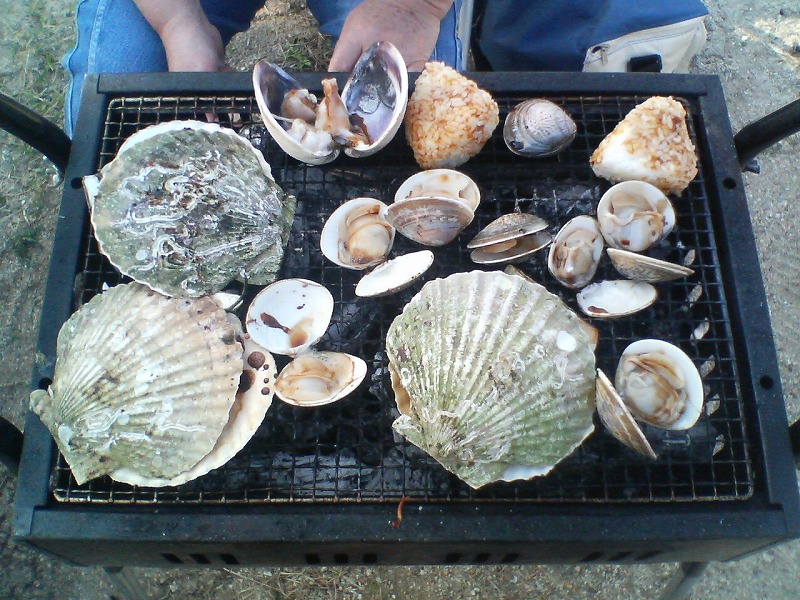
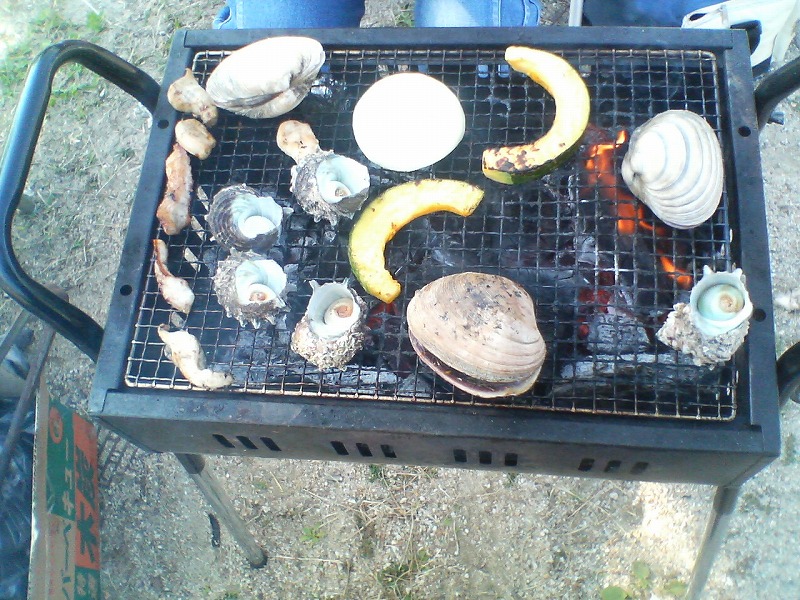
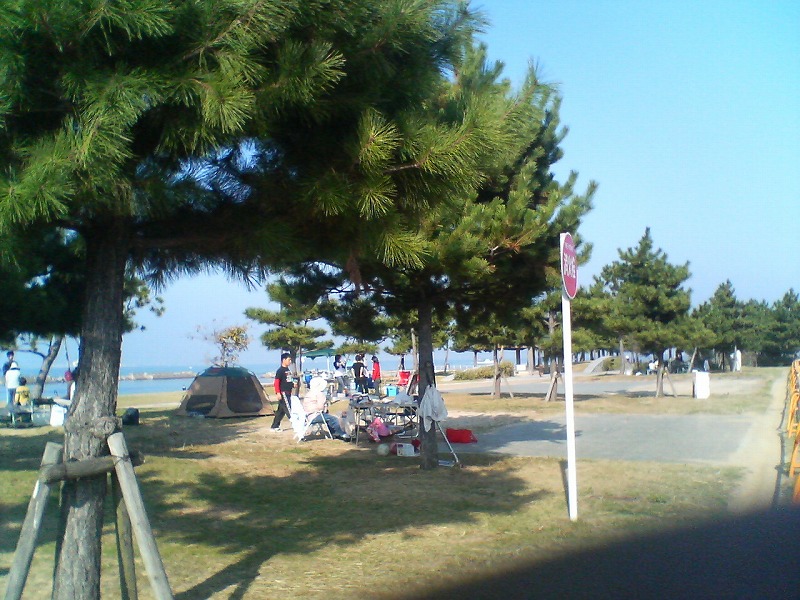
the beachThe day before yesterday I went to "Pichi Pichi beach" near my city to have a barbecue with my mom, children and their mother. Their mother is sometimes called my wife, though. :) My dad went fishing on the day, actually. He apparently would rather go fishing than eat three times a day.(三度の飯より、釣りが好き sando no meshi yori turi ga suki)
In Japan when Japanese people mention those who are crazy about something, they say "三度の飯より、somethingが好き". I hope you understand what I mean. :)

Anyway, we had tons of meat and seafood - such as beef, pork, turban(top) shells, scallops. Let me upload some pictures I took there.

bbq bbq

Ahh... I have to visit a relative's home today, in order to attend a Buddhist memorial service, that's going to be held for one of my uncles who passed away two years ago, when he was eighty-eight years old.